Опис
The Ethnographic Museum in Belgrade was founded in 1901 by separating the ethnographic department from the National Museum. Various ethnographic objects – earthenware and metal utensils, jewellery, amulets, glass and textile objects, weapons, tools, Easter eggs and other museum items were transferred to the Stevča Mihailović Foundation, which he bequeathed in his will for this very purpose. The objects were collected during field research in what was then Serbia and neighbouring countries where the Serbian people lived. The first permanent exhibition of the Museum was opened in 1904 on the occasion of the centennial celebration of the First Serbian Uprising.
Since 1953, the Ethnographic Museum in Belgrade has been located in the building of the former Belgrade Stock Exchange, on Students’ Square. The museum is engaged in researching the folk life and culture of the Serbian people and other peoples living with them and in their surroundings. The collections contain over 50 thousand objects and over 70 thousand museum exhibits of other types – photographs and photo negatives, archival materials and works of art that illustrate folk life. The Ethnographic Museum in Belgrade has a special library in the field of ethnology and anthropology with over 70 thousand library units. Since 1992, the Museum’s regular programme has also included the International Ethnological Film Festival, and since 2010, the Museum has also housed the Centre for the Intangible Cultural Heritage of Serbia.
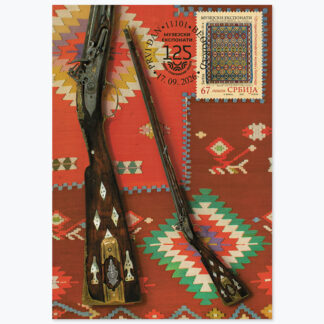
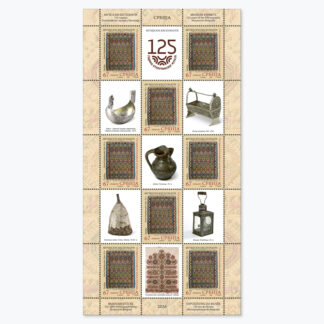
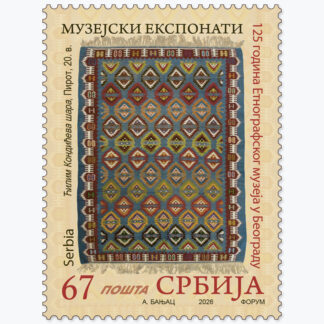
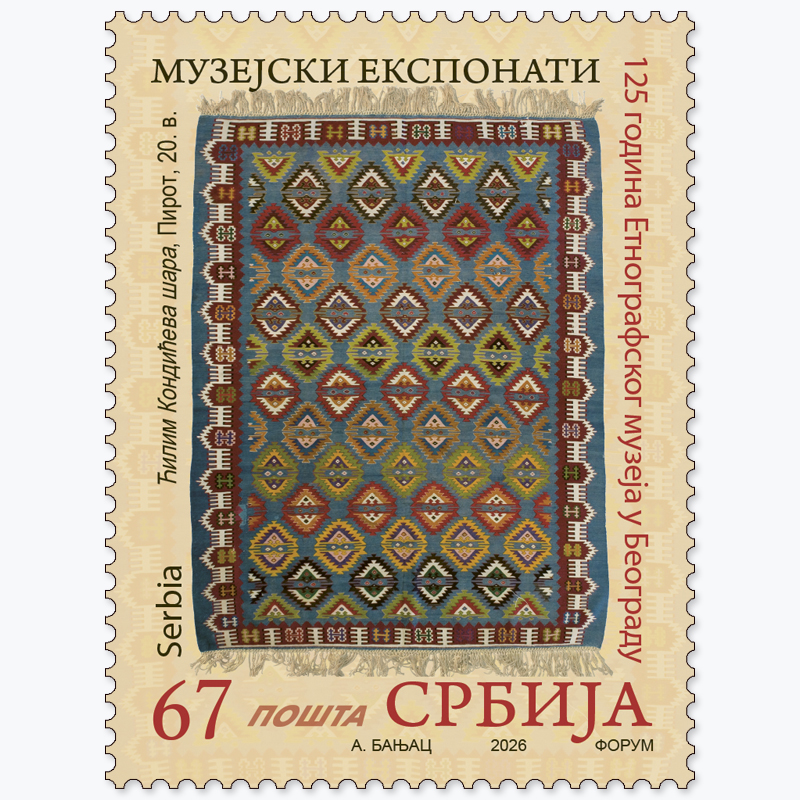
Stamp motif: Kilim “Kondić Pattern”, Pirot, Serbia, first half of the 20th century. For wall decoration or bed covering.
Motifs on the vignettes: Kovsh, decorative vessel, workshop of Pavel Akimov Ovchinnikov, 1916. Votive cradl e, Peć, 1947, blacksmith Marko Gaši. A votive is an offering given to shrines. Filigree cradles were offered by barren women who wanted a child. Jug, Lužnice, Kragujevac, mid-19th century. Made of clay, on a pedal operated pottery wheel, it was used for water and wine. Bee skep, Klenj, Mačva, 19th – 20th century. Dome-shaped, made of twigs and dung, with a handle on top for easier carrying. Lantern, Žagubica, early 20th century, metal and glass, with a wooden handle. Kosovo embroidery on a shirt sleeve, Serbia. Women’s wedding shirt – “đurđevojka”. The bride wore it on her wedding day.
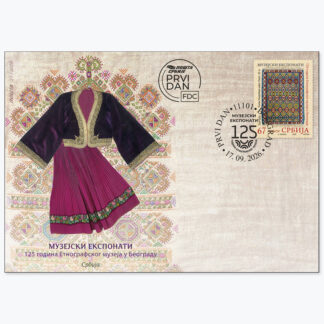
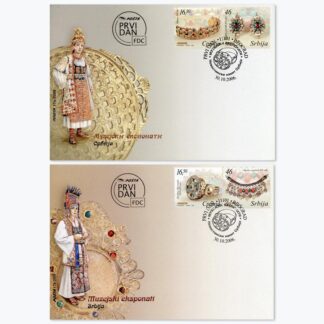
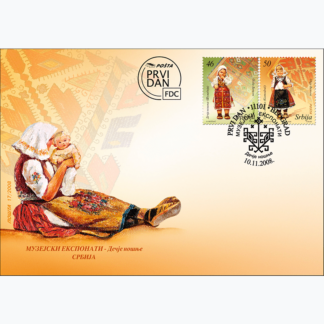
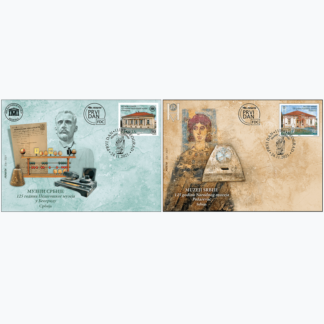
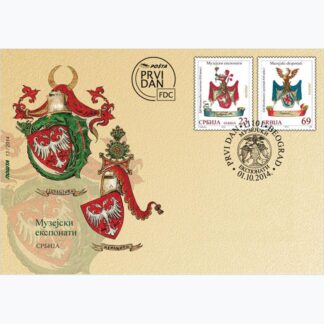
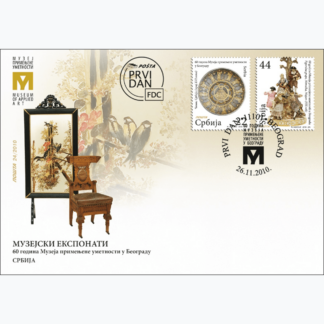
FDC motif: Libade jacket, formal women’s jacket, Belgrade, 1831; Girl’s skirt, early 20th century, Šumadija.
CM motif: Flintlock rifle, with brass and mother-of-pearl decorations, Valjevo area. In the background: Kilim, Stragari, mid-19th century.
Professional cooperation on the issue: Ethnographic Museum in Belgrade
Graphic realization of the issue: MA Anamari Banjac, Academic painter