Опис
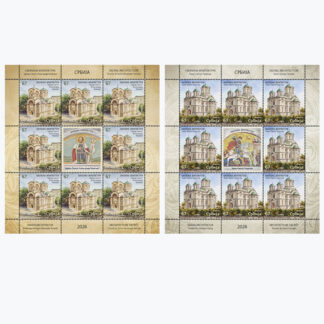
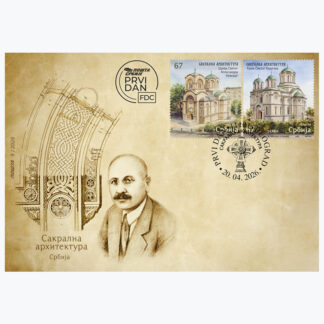
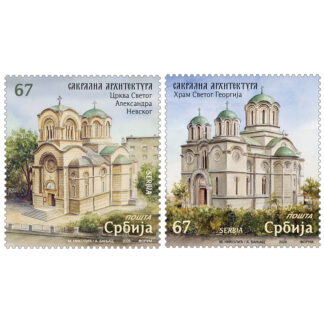
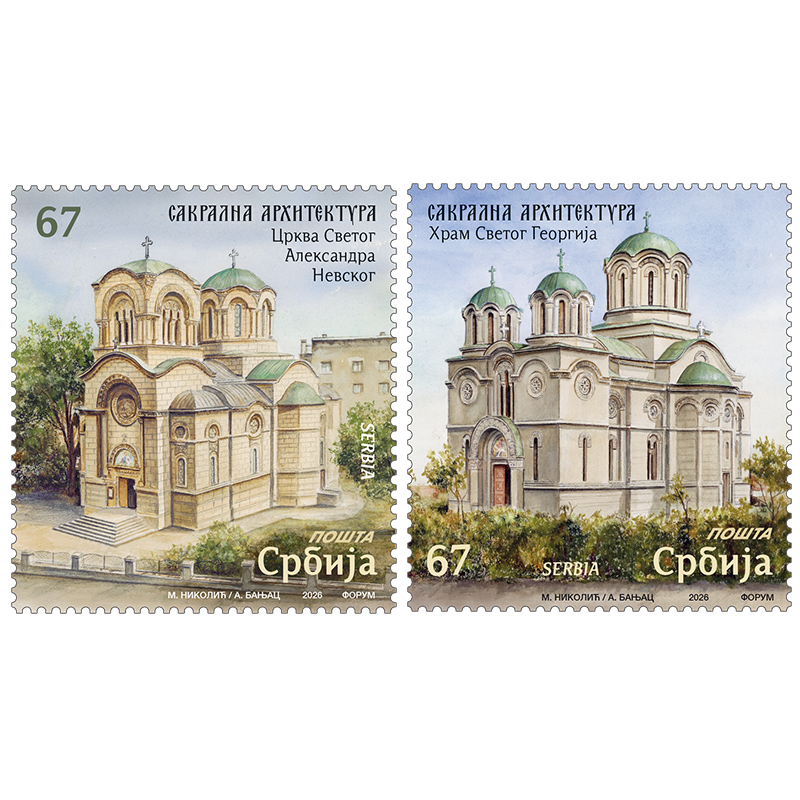
The Church of St. Alexander Nevsky was built as a parish church in Dorćol, but also as a permanent monument to the members of the Moravian Army, among whom were numerous Russian volunteers who fought for the liberation of Serbia. Built in the Serbian-Byzantine style, this triconch-domed building with a base in the shape of an inscribed cross, crowned by a central dome and adorned with rich stone decorations on the facade, is a contemporary but consistent interpretation of the original Moravian style. The original construction, which began in 1912 according to the design of architect Jelisaveta Načić, continued in 1927 and was completed in 1930, according to the architectural design of Vasily Mikhailovich Androsov (1872–1944), who designed and completed the temple. The newly built temple was the first interwar temple, and thus at one point the most modern solution in the sacral architecture of the capital.
The Saint George Temple in Čukarica was designed by Vasily Mikhailovich Androsov in co-authorship with architect Dragutin Maslać. Dimitrije Mitar Jovanović donated his land in Čukarica to the Belgrade Municipality for the construction of a church, the construction of which began in June 1928 and lasted until 1932, when it was completed and consecrated. Built in the traditional Serbian-Byzantine style, with a base of an inscribed cross and three domes, the church’s architecture is reminiscent of medieval endowments, while the white stone facade and harmonious proportions of the church provide a sense of peace and spiritual stability in the midst of the urban environment. With its specific location, on a hill that dominates the panorama of Čukarica, the Saint George Temple still emphasizes the cultural as well as urban and spatial values of this part of Belgrade today.
With his rich architectural oeuvre, Androsov left a permanent mark on Serbian sacral architecture through the churches of St. Alexander Nevsky and St. George in Čukarica, sublimating national tradition and Byzantine roots into a unique architectural expression.
Professional cooperation: Serbian Orthodox Church; Stevan Mićić, architect,
Director of the Heraldic Club Belgrade
Artistic realization: Miroslav Nikolić; MA Anamari Banjac, Academic Painter